Upcoming Events

This event is in the "Children" group

Nature Storytime

9:30am–10:00am
Children
Mr. & Mrs. F. L. Schlagle Library
This event is in the "Children" group

Baby Storytime

10:00am–10:30am
Children
Main Library

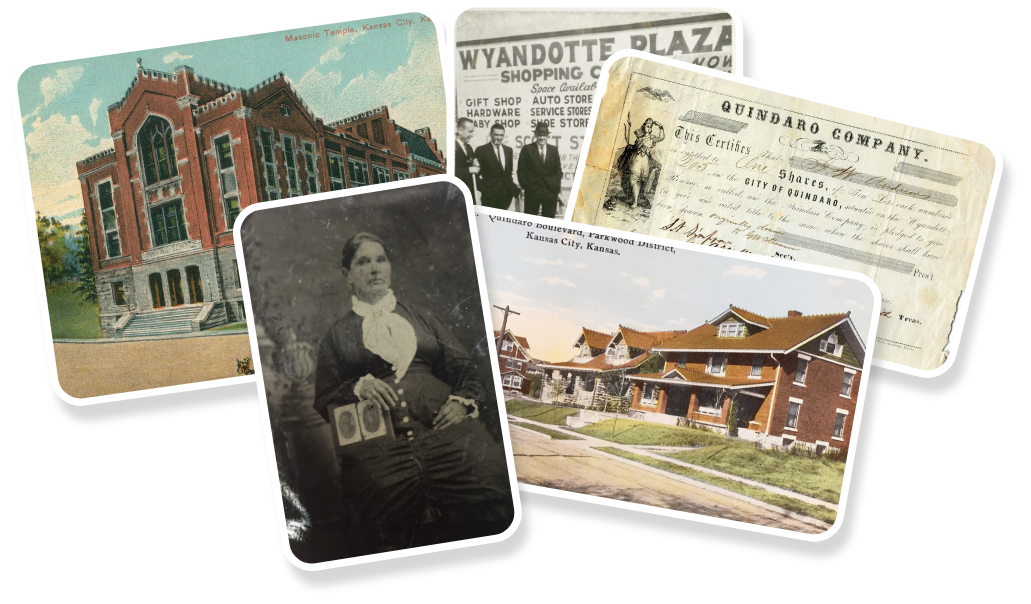
The Kansas Collection

The Kansas Room is open on Tuesdays from 9am-noon and on Thursdays from 1-4pm.

View the Collection

Collage of historic photos and documents from the Kansas Collection

Women's History Month

Book cover for "A Black Women's History of the United States"

A Black Women's History of the United States

The award-winning Revisioning American History series continues with this “groundbreaking new history of Black women in the United States” (Ibram X. Kendi)—the perfect companion to An Indigenous People’s History of the United States and An African American and Latinx History of the United States.

An empowering and intersectional history that centers the stories of African American women across 400+ years, showing how they are—and have always been—instrumental in shaping our country.

In centering Black women’s stories, two award-winning historians seek both to empower African American women and to show their allies that Black women’s unique ability to make their own communities while combatting centuries of oppression is an essential component in our continued resistance to systemic racism and sexism. Daina Ramey Berry and Kali Nicole Gross offer an examination and celebration of Black womanhood, beginning with the first African women who arrived in what became the United States to African American women of today.

A Black Women’s History of the United States reaches far beyond a single narrative to showcase Black women’s lives in all their fraught complexities. Berry and Gross prioritize many voices: enslaved women, freedwomen, religious leaders, artists, queer women, activists, and women who lived outside the law. The result is a starting point for exploring Black women’s history and a testament to the beauty, richness, rhythm, tragedy, heartbreak, rage, and enduring love that abounds in the spirit of Black women in communities throughout the nation.

Book Cover for "The Barbizon"

The Barbizon

Welcome to New York’s legendary hotel for women, the Barbizon.

Liberated after WWI from home and hearth, women flocked to New York City during the Roaring Twenties. But even as women’s residential hotels became the fashion, the Barbizon stood out; it was designed for young women with artistic aspirations, and included soaring art studios and soundproofed practice rooms. More importantly still, with no men allowed beyond the lobby, the Barbizon signaled respectability, a place where a young woman of a certain class could feel at home. 

But as the stock market crashed and the Great Depression set in, the clientele changed, though women’s ambitions did not; the Barbizon Hotel became the go-to destination for any young American woman with a dream to be something more. While Sylvia Plath most famously fictionalized her time there in The Bell Jar, the Barbizon was also where Titanic survivor Molly Brown sang her last aria; where Grace Kelly danced topless in the hallways; where Joan Didion got her first taste of Manhattan; and where both Ali MacGraw and Jaclyn Smith found their calling as actresses. Students of the prestigious Katharine Gibbs Secretarial School had three floors to themselves, Eileen Ford used the hotel as a guest house for her youngest models, and Mademoiselle magazine boarded its summer interns there, including a young designer named Betsey Johnson. 

The first ever history of this extraordinary hotel, and of the women who arrived in New York City alone from “elsewhere” with a suitcase and a dream, The Barbizon offers readers a multilayered history of New York City in the 20th century, and of the generations of American women torn between their desire for independence and their looming social expiration date. By providing women a room of their own, the Barbizon was the hotel that set them free.

Book Cover for "How to Be a Renaissance Woman"

How to Be a Renaissance Woman

An alternative history of the Renaissance—as seen through the emerging literature of beauty tips—focusing on the actresses, authors, and courtesans who rebelled against the misogyny of their era.

Beauty, make-up, art, power: How to Be a Renaissance Woman presents an alternative history of this fascinating period as told by the women behind the paintings, providing a window into their often overlooked or silenced lives.

Can the pressures women feel to look good be traced back to the sixteenth century?

As the Renaissance visual world became populated by female nudes from the likes of Michelangelo and Titian, a vibrant literary scene of beauty tips emerged, fueling debates about cosmetics and adornment. Telling the stories of courtesans, artists, actresses, and writers rebelling against the strictures of their time, when burgeoning colonialism gave rise to increasingly sinister evaluations of bodies and skin color, this book puts beauty culture into the frame.

How to Be a Renaissance Woman will take readers from bustling Italian market squares, the places where the poorest women and immigrant communities influenced cosmetic products and practices, to the highest echelons of Renaissance society, where beauty could be a powerful weapon in securing strategic marriages and family alliances. It will investigate how skin-whitening practices shifted in step with the emerging sub-Saharan African slave trade, how fads for fattening and thinning diets came and went, and how hairstyles and fashion could be a tool for dissent and rebellion—then as now.

This surprising and illuminating narrative will make you question your ideas about your own body, and ask: Why are women often so critical of their appearance? What do we stand to lose, but also to gain, from beauty culture? What is the relationship between looks and power?

Book Cover for "When Women Ran Fifth Avenue"

When Women Ran Fifth Avenue

NEW YORK TIMES BESTSELLER * A glittering portrait of the golden age of American department stores and of three visionary women who led them, from the award-winning author of The Plaza.

The twentieth century American department store: a palace of consumption where every wish could be met under one roof - afternoon tea, a stroll through the latest fashions, a wedding (or funeral) planned. It was a place where women, shopper and shopgirl alike, could stake out a newfound independence. Whether in New York or Chicago or on Main Street, USA, men owned the buildings, but inside, women ruled.

In this hothouse atmosphere, three women rose to the top. In the 1930s, Hortense Odlum of Bonwit Teller came to her husband's department store as a housewife tasked with attracting more shoppers like herself, and wound up running the company. Dorothy Shaver of Lord & Taylor championed American designers during World War II--before which US fashions were almost exclusively Parisian copies--becoming the first businesswoman to earn a $1 million salary. And in the 1960s Geraldine Stutz of Henri Bendel re-invented the look of the modern department store. With a preternatural sense for trends, she inspired a devoted following of ultra-chic shoppers as well as decades of copycats.

In When Women Ran Fifth Avenue, journalist Julie Satow draws back the curtain on three visionaries who took great risks, forging new paths for the women who followed in their footsteps. This stylish account, rich with personal drama and trade secrets, captures the department store in all its glitz, decadence, and fun, and showcases the women who made that beautifully curated world go round.

Book Cover for "All That She Carried"

All That She Carried

NATIONAL BOOK AWARD WINNER • NEW YORK TIMES BESTSELLER • A renowned historian traces the life of a single object handed down through three generations of Black women to craft a “deeply layered and insightful” (The Washington Post) testament to people who are left out of the archives.
 
WINNER: Frederick Douglass Book Prize, Harriet Tubman Prize, PEN/John Kenneth Galbraith Award, Anisfield-Wolf Book Award, Ralph Waldo Emerson Prize, Lawrence W. Levine Award, Darlene Clark Hine Award, Cundill History Prize, Joan Kelly Memorial Prize, Massachusetts Book Award

In 1850s South Carolina, an enslaved woman named Rose faced a crisis: the imminent sale of her daughter Ashley. Thinking quickly, she packed a cotton bag for her with a few items, and, soon after, the nine-year-old girl was separated from her mother and sold. Decades later, Ashley’s granddaughter Ruth embroidered this family history on the sack in spare, haunting language. 
 
Historian Tiya Miles carefully traces these women’s faint presence in archival records, and, where archives fall short, she turns to objects, art, and the environment to write a singular history of the experience of slavery, and the uncertain freedom afterward, in the United States. All That She Carried is a poignant story of resilience and love passed down against steep odds. It honors the creativity and resourcefulness of people who preserved family ties when official systems refused to do so, and it serves as a visionary illustration of how to reconstruct and recount their stories today.

Image for "Sister Mother Warrior"

Sister Mother Warrior

Acclaimed author of Island Queen Vanessa Riley brings readers a vivid, sweeping novel of the Haitian Revolution based on the true-life stories of two extraordinary women: the first Empress of Haiti, Marie-Claire Bonheur, and Gran Toya, a West African-born warrior who helped lead the rebellion that drove out the French and freed the enslaved people of Haiti.

Gran Toya: Born in West Africa, Abdaraya Toya was one of the legendary minos--women called "Dahomeyan Amazons" by the Europeans--who were specially chosen female warriors consecrated to the King of Dahomey. Betrayed by an enemy, kidnapped, and sold into slavery, Toya wound up in the French colony of Saint Domingue, where she became a force to be reckoned with on its sugar plantations: a healer and an authority figure among the enslaved. Among the motherless children she helped raise was a man who would become the revolutionary Jean-Jacques Dessalines. When the enslaved people rose up, Toya, ever the warrior, was at the forefront of the rebellion that changed the course of history.

Marie-Claire: A free woman of color, Marie-Claire Bonheur was raised in an air of privilege and security because of her wealthy white grandfather. With a passion for charitable work, she grew up looking for ways to help those oppressed by a society steeped in racial and economic injustices. Falling in love with Jean-Jacques Dessalines, an enslaved man, was never the plan, yet their paths continued to cross and intertwine, and despite a marriage of convenience to a Frenchman, she and Dessalines had several children.

When war breaks out on Saint Domingue, pitting the French, Spanish, and enslaved people against one another in turn, Marie-Claire and Toya finally meet, and despite their deep differences, they both play pivotal roles in the revolution that will eventually lead to full independence for Haiti and its people.

Both an emotionally palpable love story and a detail-rich historical novel, Sister Mother Warrior tells the often-overlooked history of the most successful Black uprising in history. Riley celebrates the tremendous courage and resilience of the revolutionaries, and the formidable strength and intelligence of Toya, Marie-Claire, and the countless other women who fought for freedom.

book cover for "The genius of Judy: how Judy Blume rewrote childhood for all of us"

The Genius of Judy

An intimate and expansive look at Judy Blume’s life, work, and cultural impact, focusing on her most iconic—and controversial—young adult novels, from Are You There God? It’s Me, Margaret. to Blubber.

Everyone knows Judy Blume. Her books have garnered her fans of all ages for decades and sold tens of millions of copies. But why were people so drawn to them? And why are we still talking about them now in the 21st century?

In The Genius of Judy, her remarkable story is revealed as never before, beginning with her as a mother of two searching for purpose outside of her home in 1960s suburban New Jersey. The books she wrote starred regular children with genuine thoughts and problems. But behind those deceptively simple tales, Blume explored the pillars of the growing women’s rights movement, in which girls and women were entitled to careers, bodily autonomy, fulfilling relationships, and even sexual pleasure. Blume wasn’t trying to be a revolutionary—she just wanted to tell honest stories—but in doing so, she created a cohesive, culture-altering vision of modern adolescence.

Blume’s bravery provoked backlash, making her the country’s most-banned author in the mid-1980s. Thankfully, her works withstood those culture wars and it’s no coincidence that Blume has resurfaced as a cultural touchstone now. Young girls are still cat-called, sex education curricula are getting dismissed as pornography, and entire shelves of libraries are being banned. As we face these challenges, it’s only natural we look to Blume, the grand dame of so-called dirty books. This is the story of how a housewife became a groundbreaking artist, and how generations of empowered fans are her legacy, today more than ever.